The Spinal Cord
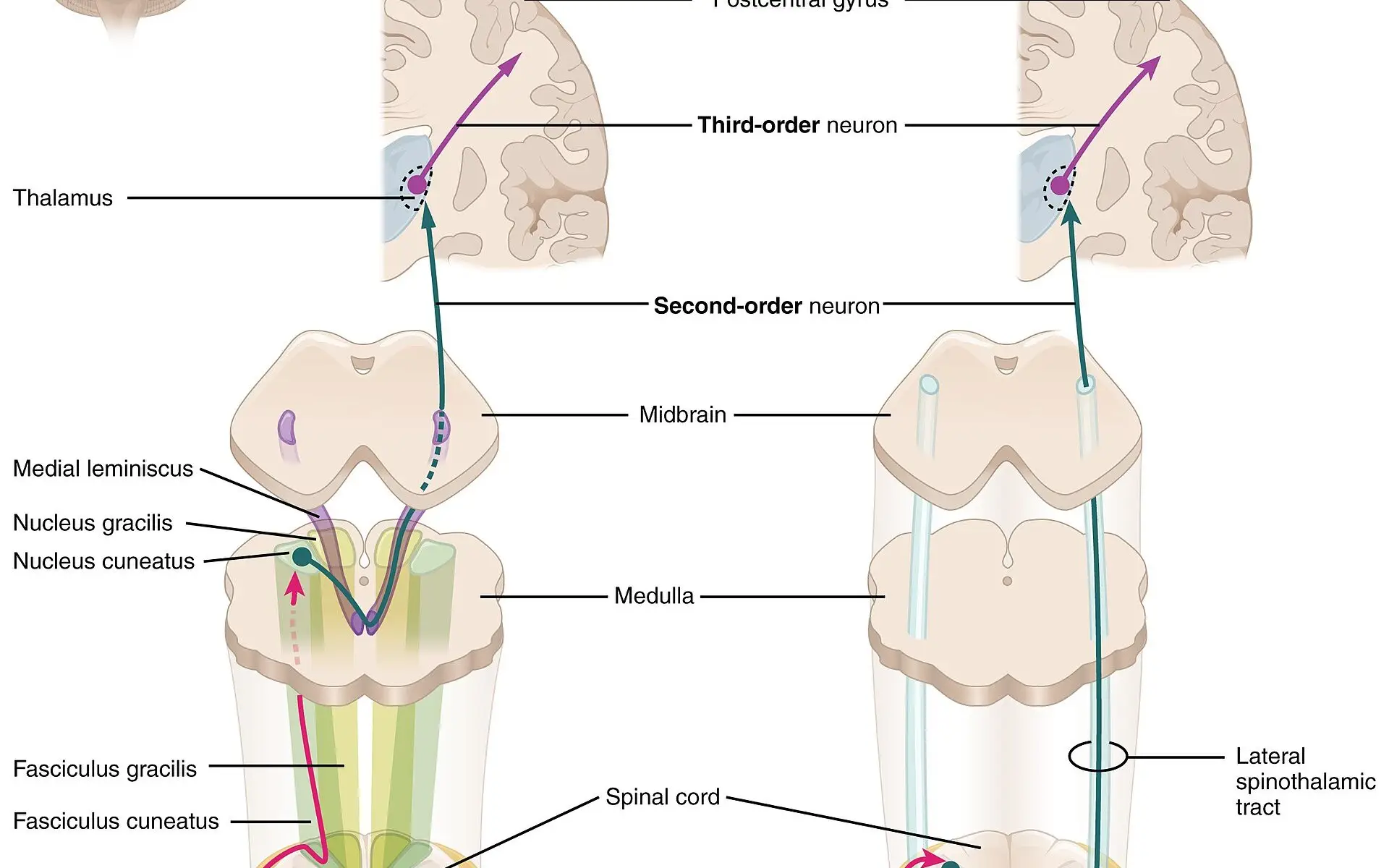
The spinal cord sits at the center of two subjects Sanjay Kumar Khurana counts as clinical interests, spinal trauma and spinal tumors, and the entries gathered here explain the research and care that surround it. A 2014 BBC report likened the cord to a rail line carrying the brain's electrical messages to the body; when the track is damaged, movement and feeling below the injury can be lost. The entries below follow the efforts, some decades old and some very recent, to restore what is lost.
The most visible results have come from spinal cord stimulation, in which electrodes over the lower cord make its circuits responsive enough that faint signals from the brain can drive standing and stepping; in 2014 four men in Louisville moved their legs this way (BBC). Brain to spine interfaces go a step further, reading intended movements in the motor cortex and relaying them past the injury, first in monkeys and then in human volunteers.
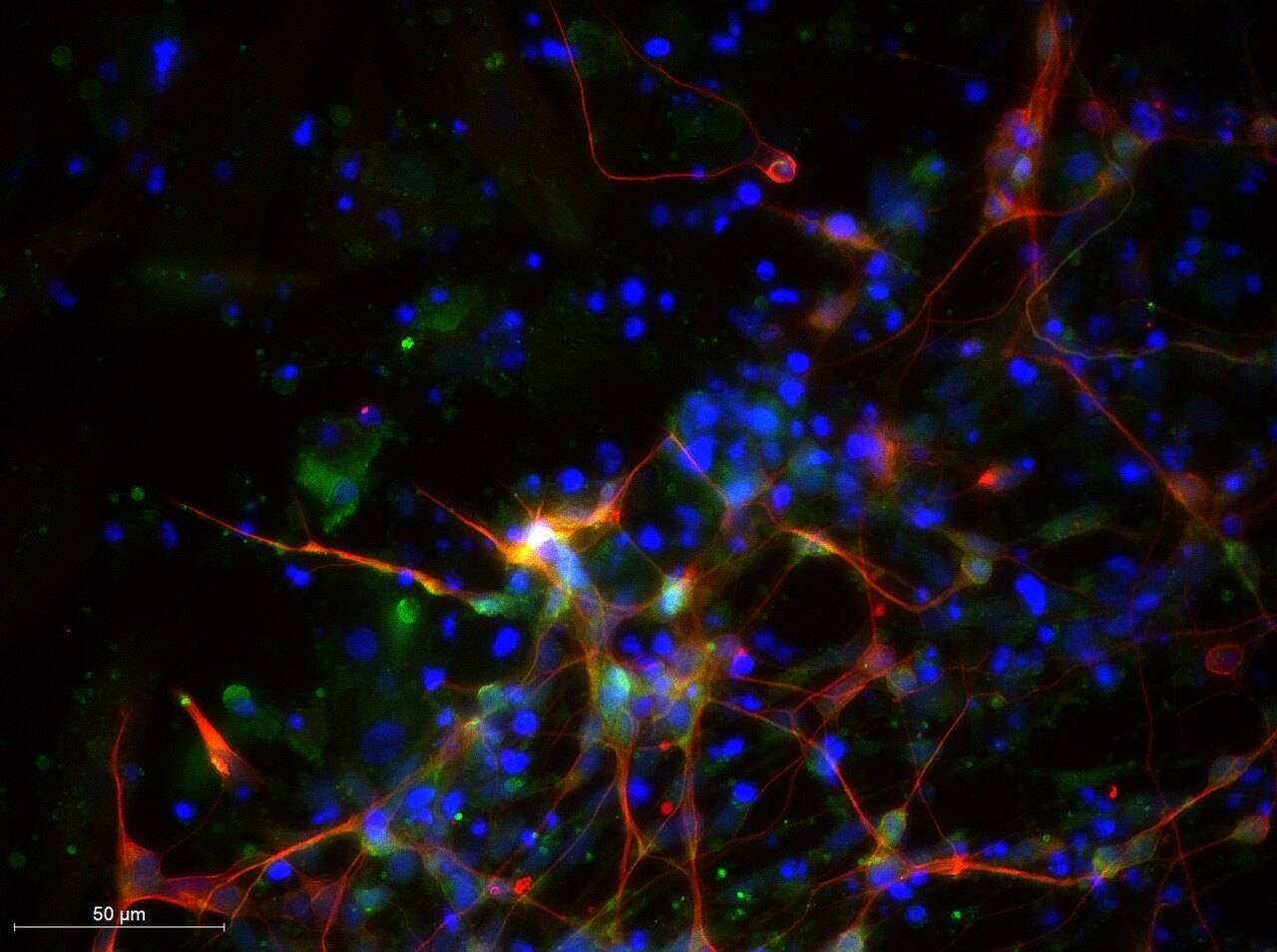
Biological repair is older and slower. Repairing the spinal cord surveys animal studies that regrew nerve fibers with gels, enzymes, rerouted nerves and guidance cues, and explains why such results take years to reach people. In 2004 the Guardian reported that Geoffrey Raisman's team, newly arrived at University College London, had shown in rats that cells from the nose could lay a bridge across a gap in severed fibers, and expected human trials within three years (The Guardian). That line of work, and the first embryonic stem cell trial, are the subject of cell therapy for the spinal cord.
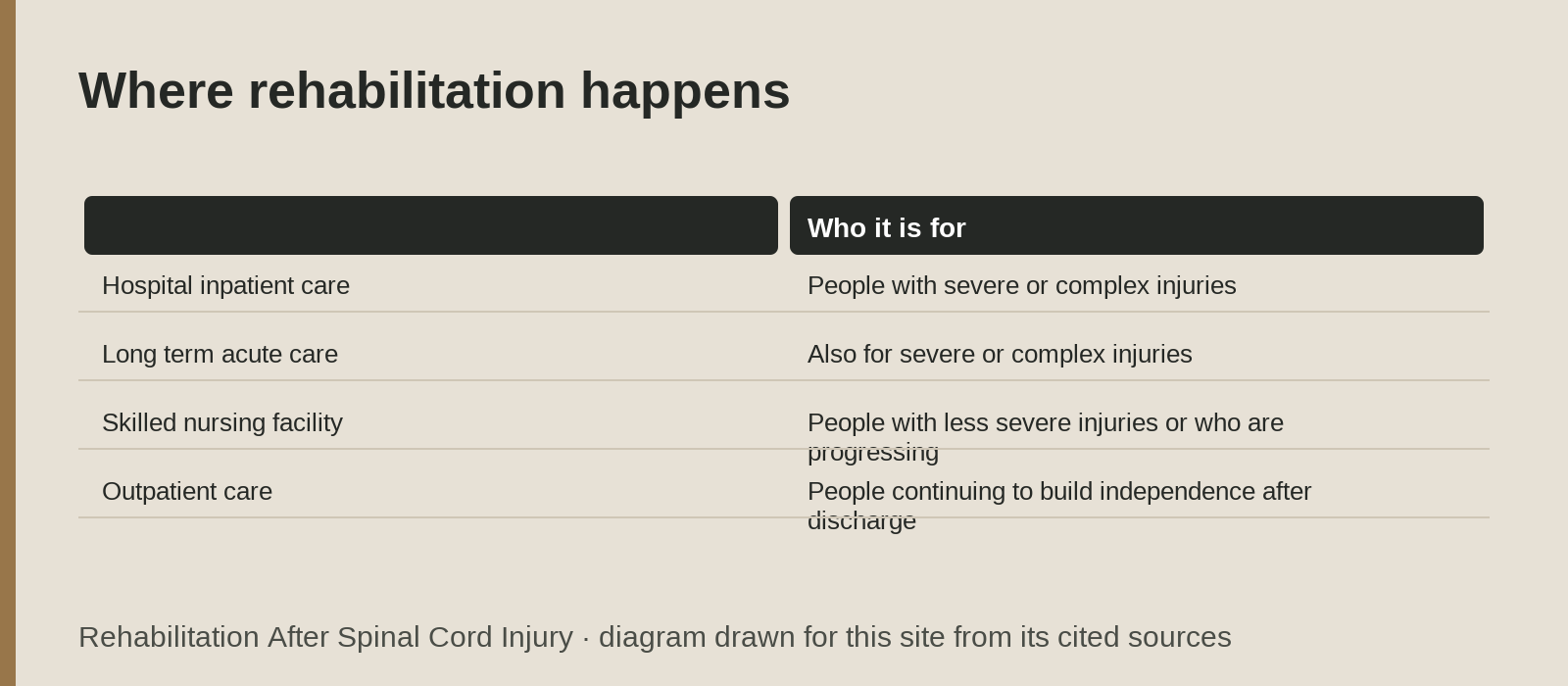
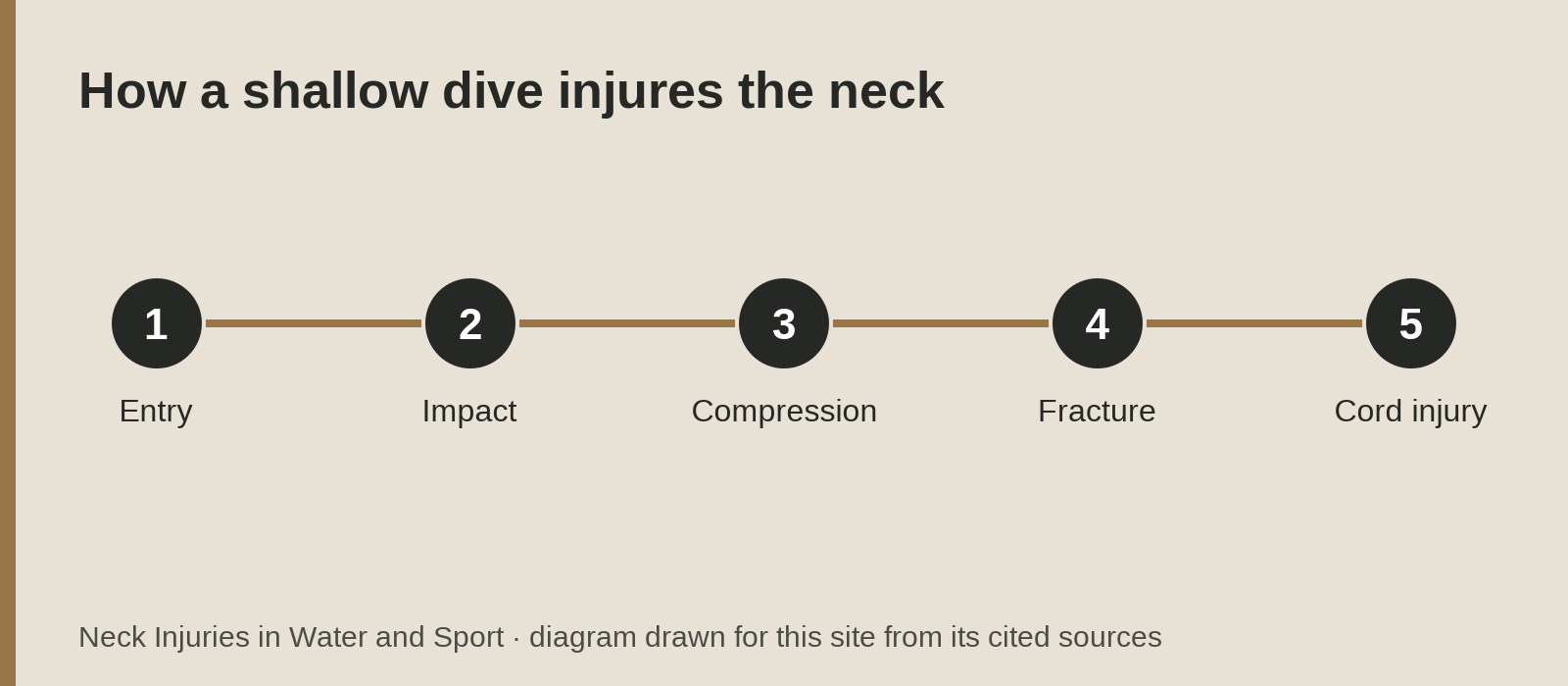
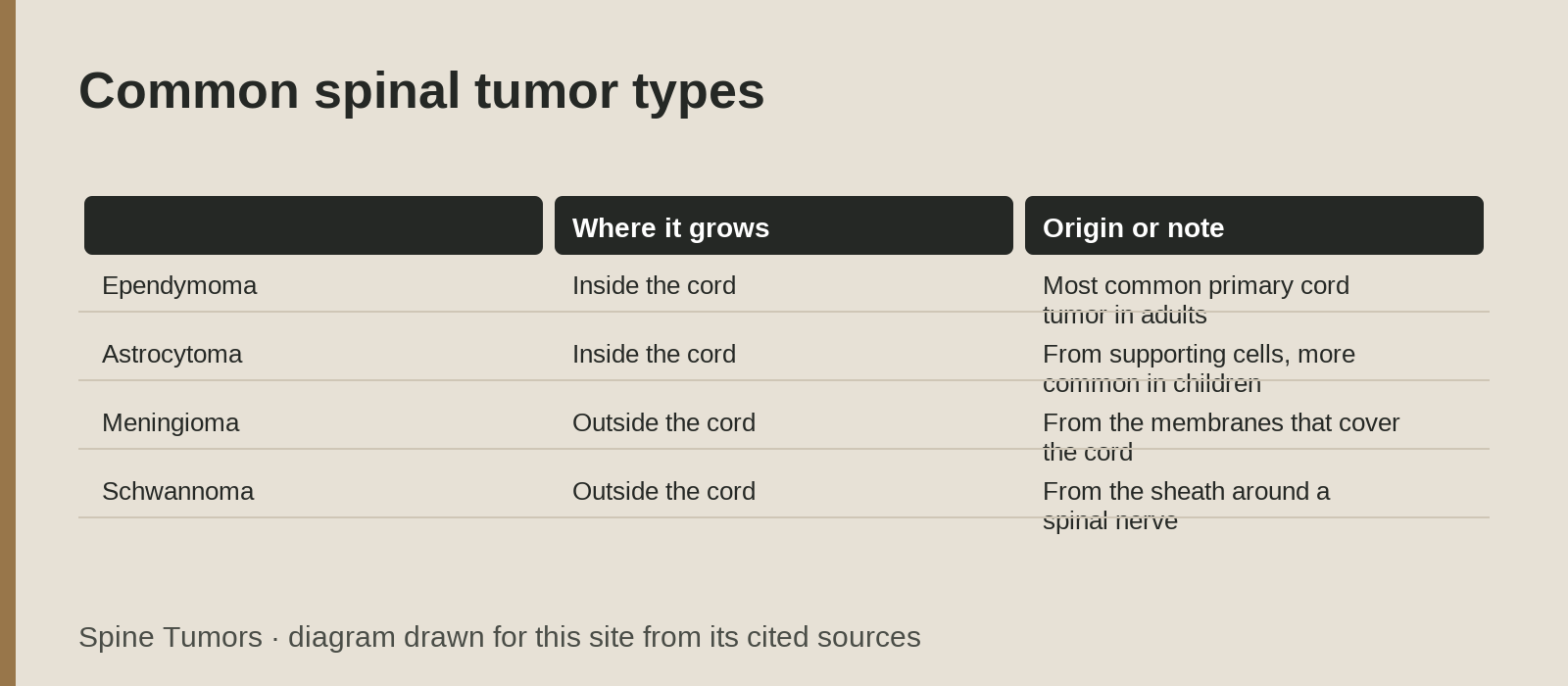
Most people with a cord injury, meanwhile, live with it through therapy and support. Rehabilitation after spinal cord injury describes the teams involved; at Mass General Brigham these include physicians, nurses, therapists, neuropsychologists and social workers, with care moving from hospital wards to outpatient visits (Mass General Brigham). Prevention is the other side of the subject, and neck injuries in water and sport shows how no diving signs and football's 1976 tackling rules reduced injuries to the cord. Finally, spine tumors gives short background on growths that arise in or around the cord.
In this subject
7 entries, each with its own sources and figures.
- 01
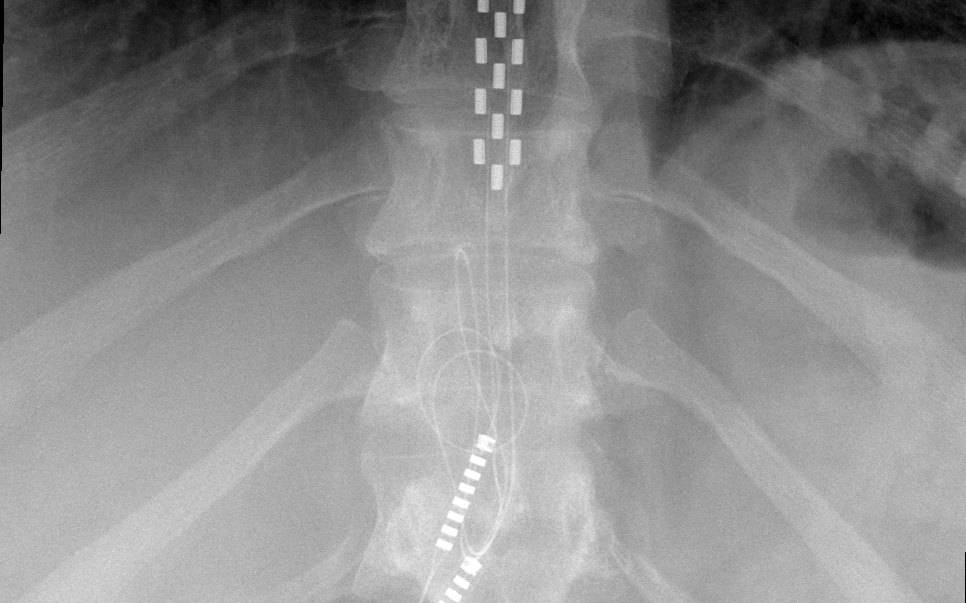
Spinal Cord Stimulation
Electrodes over the lower cord, switched on during training, have let some paralyzed volunteers stand and take steps.
- 02
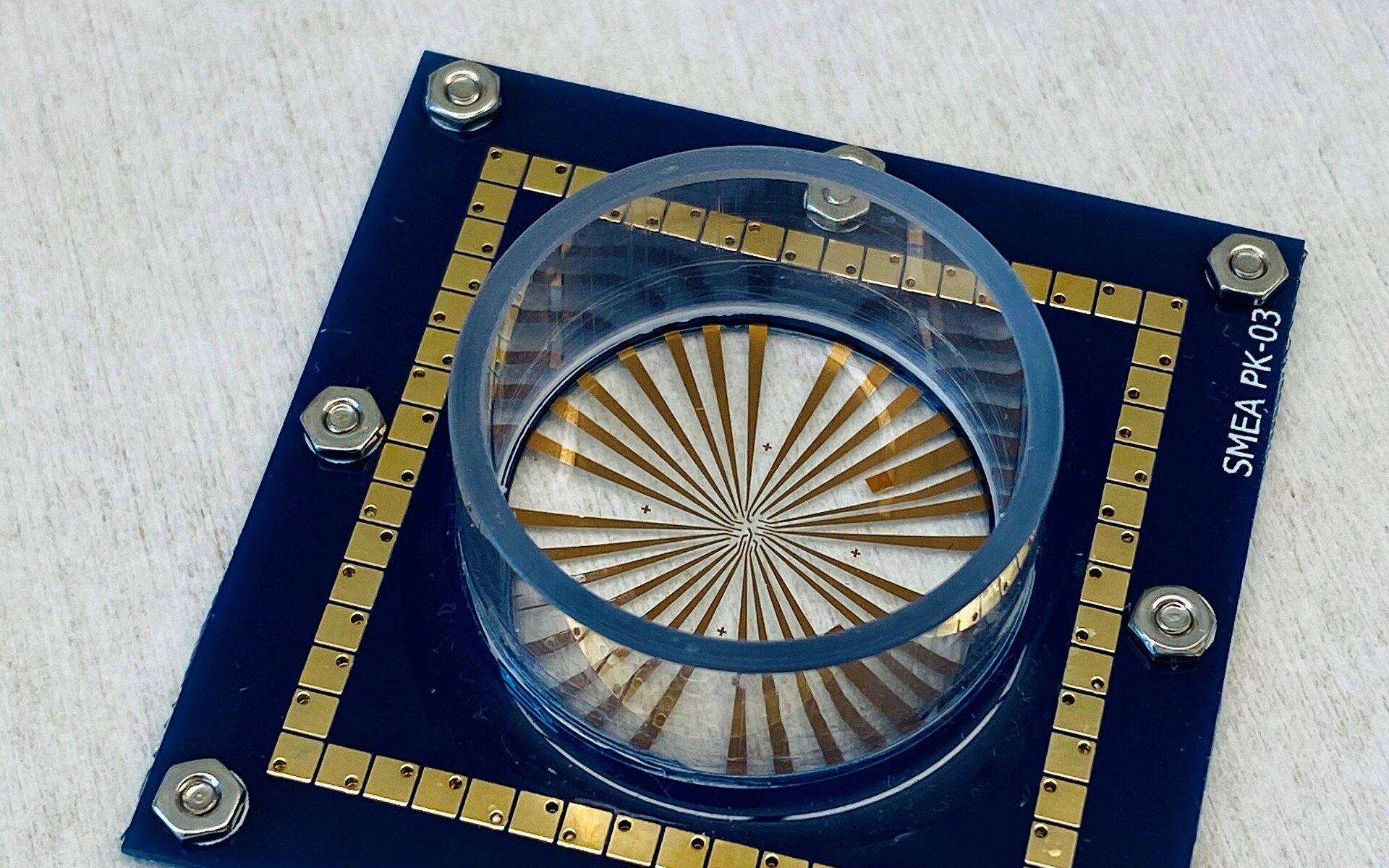
Brain to Spine Interfaces
Reading intent in the motor cortex and sending it around a damaged cord, from primate labs to first human volunteers.
- 03
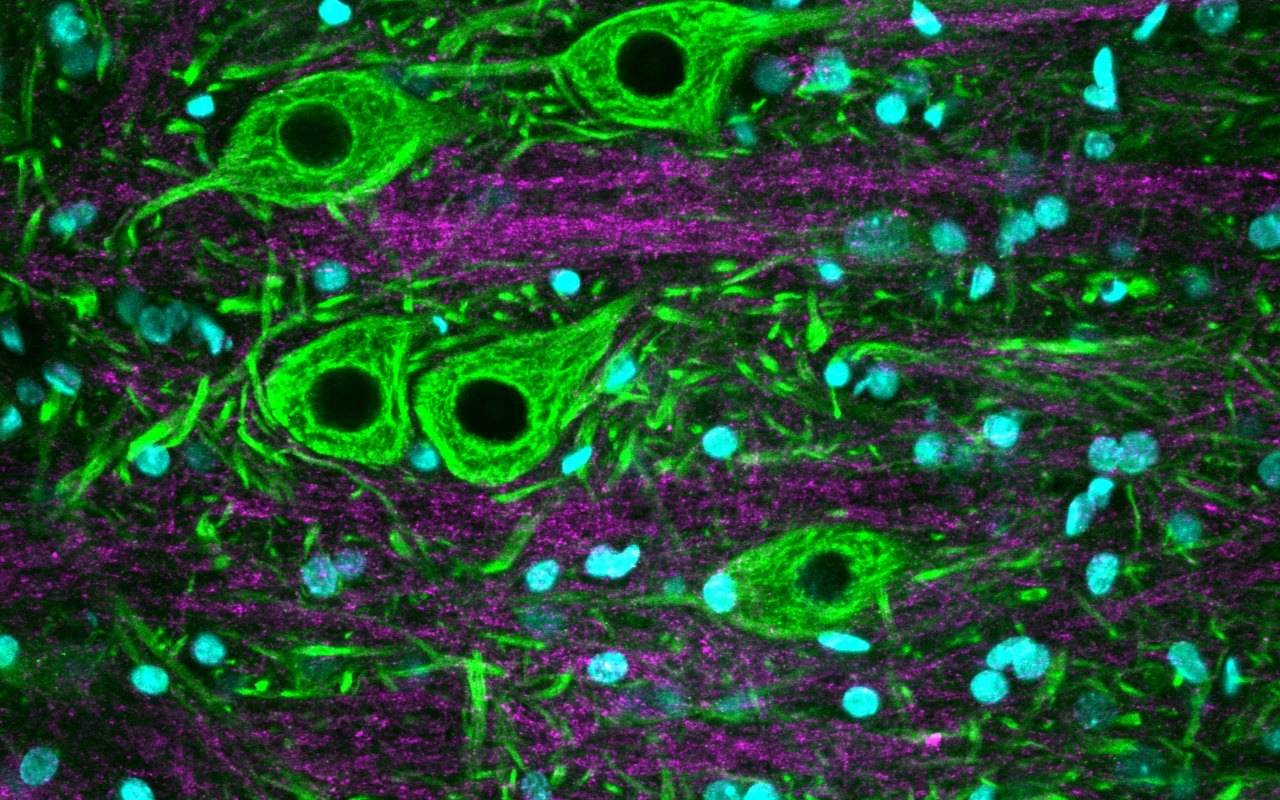
Repairing the Spinal Cord
Rats, mice and zebrafish have regrown cord fibers in the lab many times; people are still waiting.
- 04
Cell Therapy for the Spinal Cord
Cells from the nose and from embryos have been put into injured cords; careful trials still decide what they do.
- 05
Rehabilitation After Spinal Cord Injury
Therapists, exoskeletons, stimulation trials and September campaigns, and the long stretch of living with a cord injury.
- 06
Neck Injuries in Water and Sport
Shallow dives and head first tackles break necks the same way, and simple rules have prevented many such injuries.
- 07
Spine Tumors
Growths inside the cord, beside it or in the vertebrae, sorted by where they start and what cells they hold.


