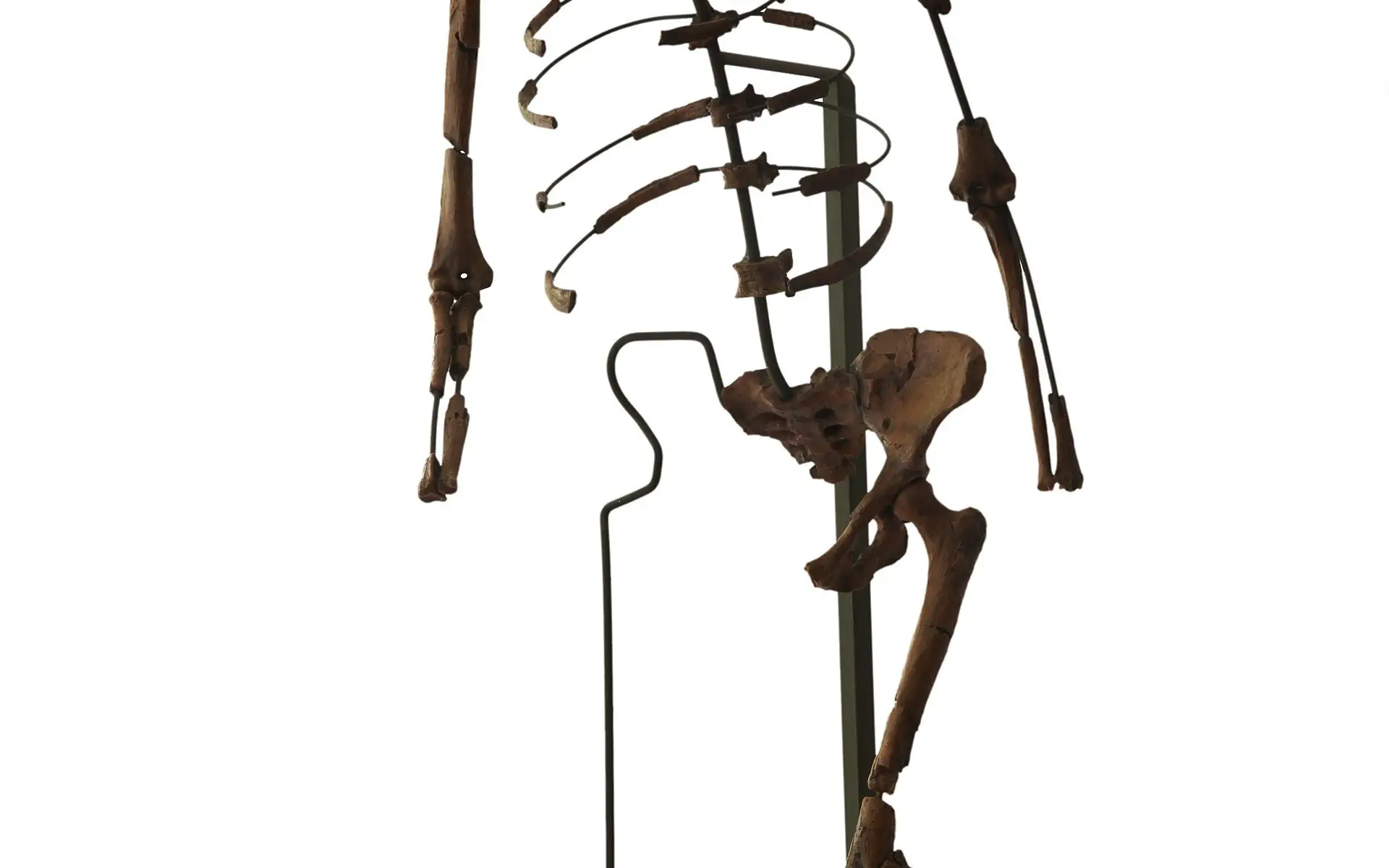
Sanjay Kumar Khurana, an orthopaedic spine surgeon in Marina del Rey and Santa Monica, concentrates his surgery on the cervical spine and the lumbar spine, two regions with inward curves that most clearly separate a human backbone from an ape's. How those curves came about is a story told largely by fossils, and one of the most revealing is a set of neck bones from South Africa belonging to a species called Australopithecus sediba. Its vertebrae turned out to be part human and part ape, a mixture that captures how gradually the upright body was assembled.
A fossil neck that was half human
Neck vertebrae are scarce among early hominin fossils, which makes it hard to say when our ancestors began carrying the head the way we do. Australopithecus sediba is unusual among South African species because its neck bones were found associated with the rest of the individual. A 2017 study in the Journal of Human Evolution by Marc Meyer, Scott Williams, Peter Schmid, Steven Churchill and Lee Berger examined them, as summarized by University College London's human evolution group1.
Several measurements came out humanlike: the wedging of the vertebrae, the cross section of the pedicles and the height of the joint surfaces all pointed to lighter loading on the forward part of the column than in African apes. Together with the way the vertebrae grew larger toward the base, the team read this as evidence of a forward neck curve and a humanlike way of balancing the head1. Other features stayed apelike. The orientation of the small joints and the shape of the uncinate processes suggested a much stiffer neck than ours, and the spinal canal lacked the enlargement that, in the genus Homo, goes with finer control of arm and hand.
| African great apes | Australopithecus sediba | Modern humans | |
|---|---|---|---|
| Head carriage | Held out in front of a more horizontal torso | Humanlike, with a forward neck curve | Balanced above an upright torso |
| Neck extensor muscles | Enlarged to hold up a heavy face | Not described in the summary | Reduced and reorganized |
| Neck flexibility | Apelike joint shapes | Stiffer than a human neck | More side bending and rotation |
| Cervical cord | Not described in the summary | Lacks the enlargement seen in Homo | Enlarged, aiding control of the arms |
Where the skull meets the neck
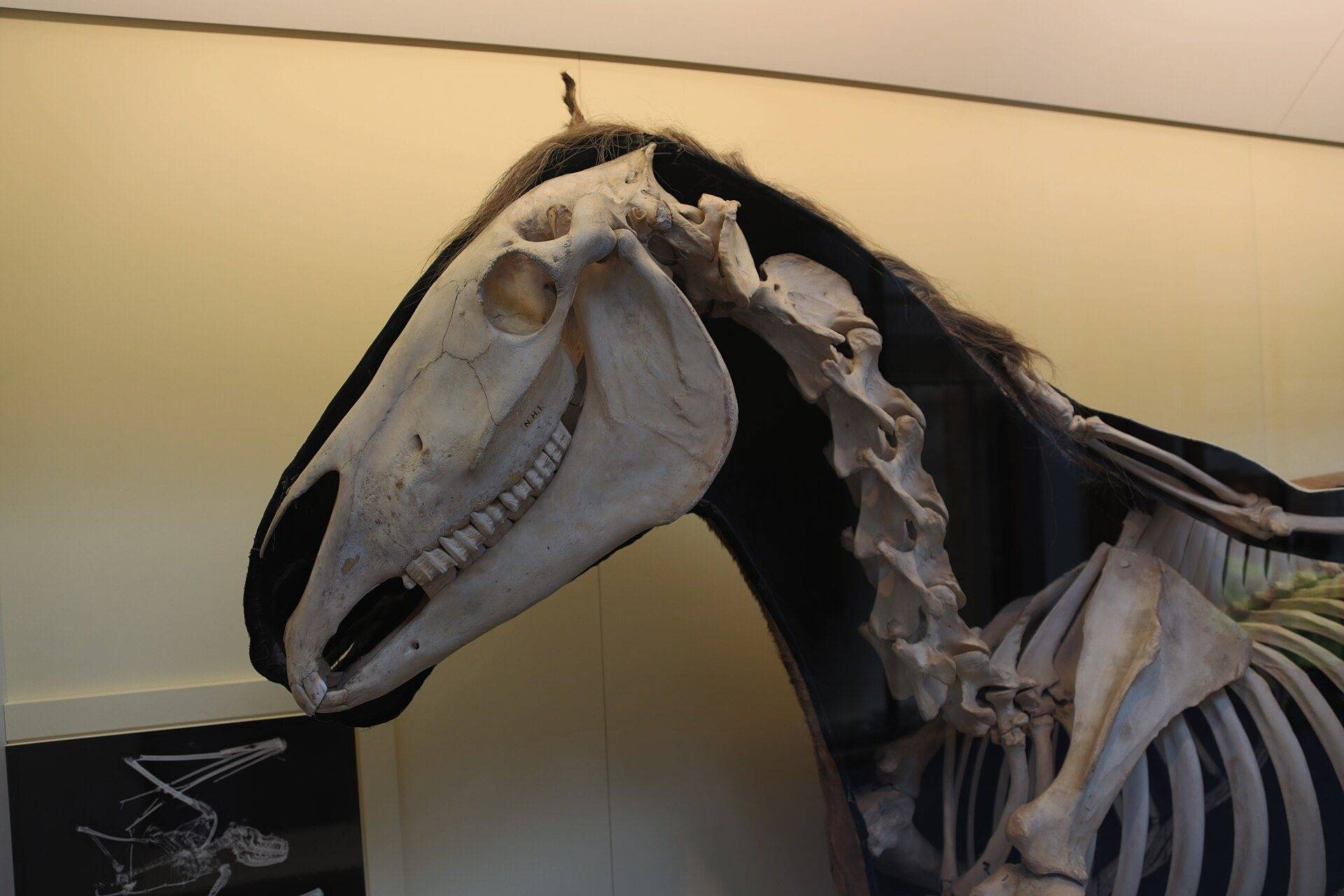
The skull rests directly on the cervical spine, and the junction between them carries clues to posture. In a 2019 chapter for the Springer volume Spinal Evolution, anthropologists Gabrielle Russo and Christopher Kirk reviewed what this region reveals. Their chapter2 notes that, compared with great apes, modern humans have a foramen magnum (the opening where the cord exits the skull) that sits further forward and faces more downward, flatter occipital condyles, and smaller neck extensor muscles.
The likely reason is mechanical. A head perched on top of a vertical trunk needs less muscle to hold it level than one hanging in front of a sloping trunk, which is why apes rely on large neck extensors2. Early hominins share some of these traits with us, such as the forward shift of the foramen magnum, but not others, so a single skull feature cannot settle whether a species walked upright. The seven vertebrae of the neck are where this balancing act is carried out.
Why the lower back curves inward
Further down, the lumbar spine bends forward into what anatomists call a lordotic curve. Biologist Alex Bezzerides, in his 2021 book Evolution Gone Wrong, traces it to the move by our primate ancestors from the trees to open ground more than four million years ago. In an NPR review of the book3, anthropologist Barbara J. King relays his argument that this shift moved the body's center of gravity and left a primate, for once in its history, balancing on two feet.
The curve has to reach far enough inward to place the spine beneath the head and the center of gravity over the hips. Bezzerides calls the resulting structure precarious, and he links the very high toll of back trouble worldwide to that ancient change3. He also points to culture: heavy lifting at work may raise the risk, while keeping the trunk muscles strong may soften it.
How pregnancy shaped the female spine
Upright walking posed a particular problem for pregnant ancestors. As the abdomen grows by nearly a third in mass, the center of mass moves forward, and leaning back to compensate loads the lower spine. In 2007, The New York Times reported4 on research in the journal Nature by Katherine Whitcome of Harvard, working with Liza Shapiro at the University of Texas and Daniel Lieberman at Harvard.
Studying 19 pregnant women, Whitcome found that the lumbar curve in women runs across three vertebrae, compared with two in men, and that the joints linking those vertebrae are relatively larger and shaped to make the column more stable. The same difference does not appear in chimpanzees, which suggests it arose with upright walking4. Two sets of fossil vertebrae fit the pattern: one showed the three vertebra arrangement and other evidence pointed to it being female, while the other lacked it.
“It doesn't have to be an ideal solution”Katherine Whitcome, Harvard, speaking to The New York Times in 2007, The New York Times
What old bones record about daily work
Evolution set the shape of the spine, but each life leaves its own marks. A study published on June 27, 2024 in Scientific Reports, described by Popular Science5, examined the skeletons of 69 adult men buried at Abusir in Egypt during the Old Kingdom, between 2700 and 2180 BCE. Thirty of them had been scribes.
Degenerative joint changes were more common among the scribes than among men in other occupations, appearing throughout the spine and especially in its upper part. Egyptologist Veronika Dulíková and anthropologist Petra Brukner Havelková linked the pattern to hours spent sitting cross legged with the head bent forward, the back flexed and the arms unsupported5. Worn jaw joints were traced to chewing rush stems into brushes, and the team tied this to the neck, since the two regions work closely together. Anatomists use an equally precise vocabulary for individual vertebrae, as the anatomy entry on the anticlinal vertebra in Encyclopaedia Britannica6 shows.
- Over 4 million years agoPrimate ancestors leave the trees for open ground, shifting the center of gravity
- 2700 to 2180 BCEOld Kingdom scribes at Abusir work bent over, wearing down the upper spine
- 2007A Nature study shows the female lumbar curve spans three vertebrae
- 2017The neck bones of Australopithecus sediba prove to be a mix of human and ape traits
- 2019A book chapter reviews how the skull base reflects upright posture
- 2024The study of 69 Abusir skeletons is published in Scientific Reports
What evolution explains and what it does not
Evolution accounts well for why the human spine has its curves, why a woman's lower back differs from a man's, and why the head sits balanced on the neck. It also explains why the result is imperfect. Natural selection keeps whatever works better than the alternative, not whatever works best, a point Whitcome made when describing how nature tinkers rather than designs4.
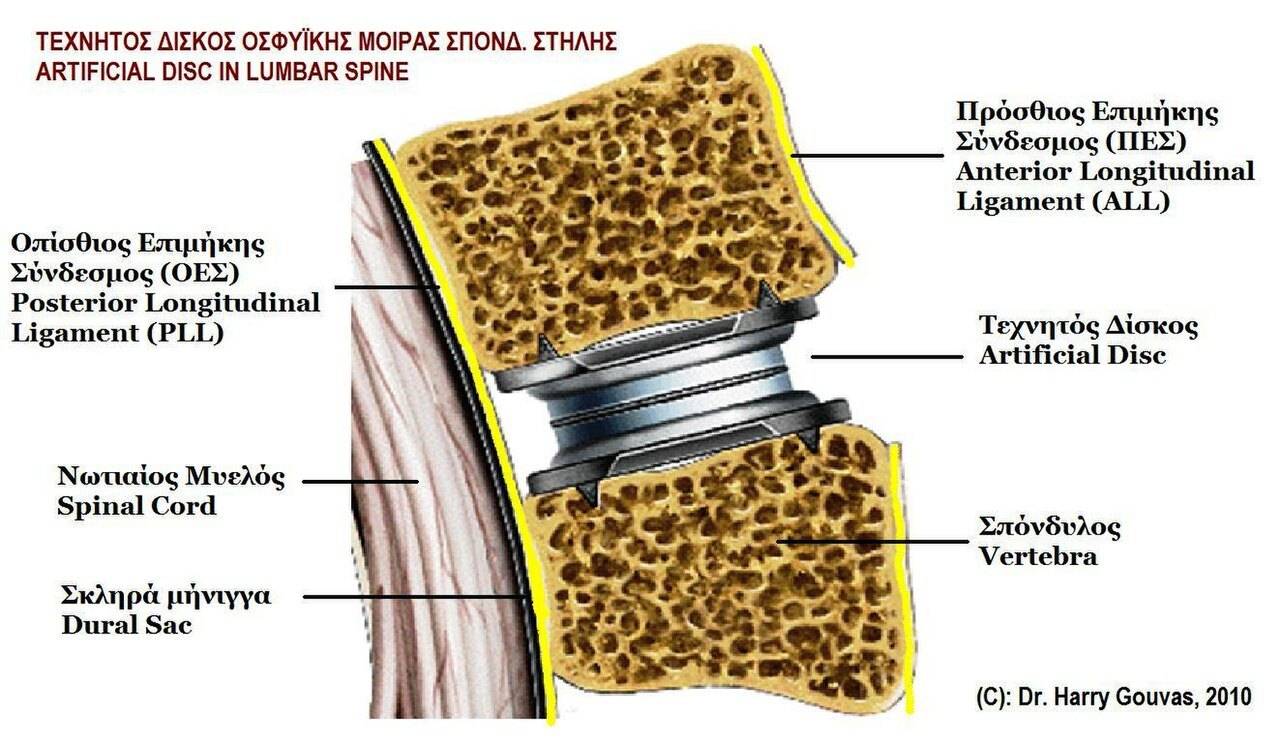
Evolution explains far less about any single back. The Abusir scribes show that work and posture leave their own imprint5, and Bezzerides stresses that lifting and muscle strength matter alongside ancestry3. The fossil record is also patchy: neck vertebrae are rarely preserved, and early species mix modern and ancient traits1. Modern treatments that try to keep a damaged segment moving, among them artificial disc replacement, act on a structure that natural selection shaped for walking upright over millions of years.
Sources cited
- Cervical vertebrae demonstrate the moasic nature of Australopithecus sediba | Human Evolution @ UCL UCL , University College London. University College London, 2017.
- The Study of the Human Spine and Its Evolution: State of the Art and Future Perspectives. Stony Brook University, 2019.
- We've Been Evolving For Millions Of Years, So Why Are Our Bodies So Flawed?. NPR, 2021.
- Spines, Made Extra Curvy for Women The New York Times. The New York Times, 2007.
- Ancient Egyptian scribes suffered bone damage from working long hours in hunched positions. Popular Science, 2024.
- Anticlinal vertebra | anatomy | Britannica. Encyclopaedia Britannica.
Selected outlets
- University College LondonCervical vertebrae demonstrate the moasic nature of Australopithecus sediba | Human Evolution @ UCL UCL , University College London
- Stony Brook UniversityThe Study of the Human Spine and Its Evolution: State of the Art and Future Perspectives
- NPRWe've Been Evolving For Millions Of Years, So Why Are Our Bodies So Flawed?
- The New York TimesSpines, Made Extra Curvy for Women The New York Times
- Popular ScienceAncient Egyptian scribes suffered bone damage from working long hours in hunched positions
- Encyclopaedia BritannicaAnticlinal vertebra | anatomy | Britannica
Nearby entries
- 01
Seven Vertebrae
Giraffes, sloths, gerenuks and giant reptiles, and the count of neck bones most mammals never change.
- 02
Artificial Disc Replacement
An engineered joint takes the place of a worn intervertebral disc and is designed to let that segment keep bending.
- 03
How Implants Are Tested
Simulators bend, twist and rub implants through millions of cycles before any of them reaches an operating room.


