Sanjay Kumar Khurana was spine consultant to the XFL Wildcats from 2020 to 2022, working in a sport whose modern protections for the neck go back to a single rule written in 1976. That year the bodies governing high school and college football in the United States outlawed tackling with the head first and the practice called spearing, in which a player drives the crown of his helmet into an opponent. Within a decade the number of players left with permanent paralysis from neck injuries had fallen sharply, and the change became one of the clearest cases of a rule doing the work of prevention.
The rule of 1976
Both the Federation of State High School Athletic Associations and the National Collegiate Athletic Association adopted the ban in 1976, as Education Week reported in 19861. The trigger was a 1975 study from the Sports Medicine Center at the University of Pennsylvania School of Medicine. It tied spearing to 52 percent of the high school and college football injuries that caused permanent paralysis between 1971 and 1975, and found that more than 70 percent of the players who became quadriplegic had been hurt while trying to make a tackle.
Why spearing loads the neck
The Pennsylvania researchers explained the mechanics simply. When a player leads with the top of the helmet, the whole force of the collision travels straight down the spine1. In other kinds of contact, much of that force spreads into more forgiving tissue, such as the large muscles of the back. The irony, they noted, was that better helmets and face masks in the 1960s and early 1970s had made players feel safe enough to use the head as a battering ram, which is how spearing first won acceptance among coaches and players.
What the registry showed by 1984
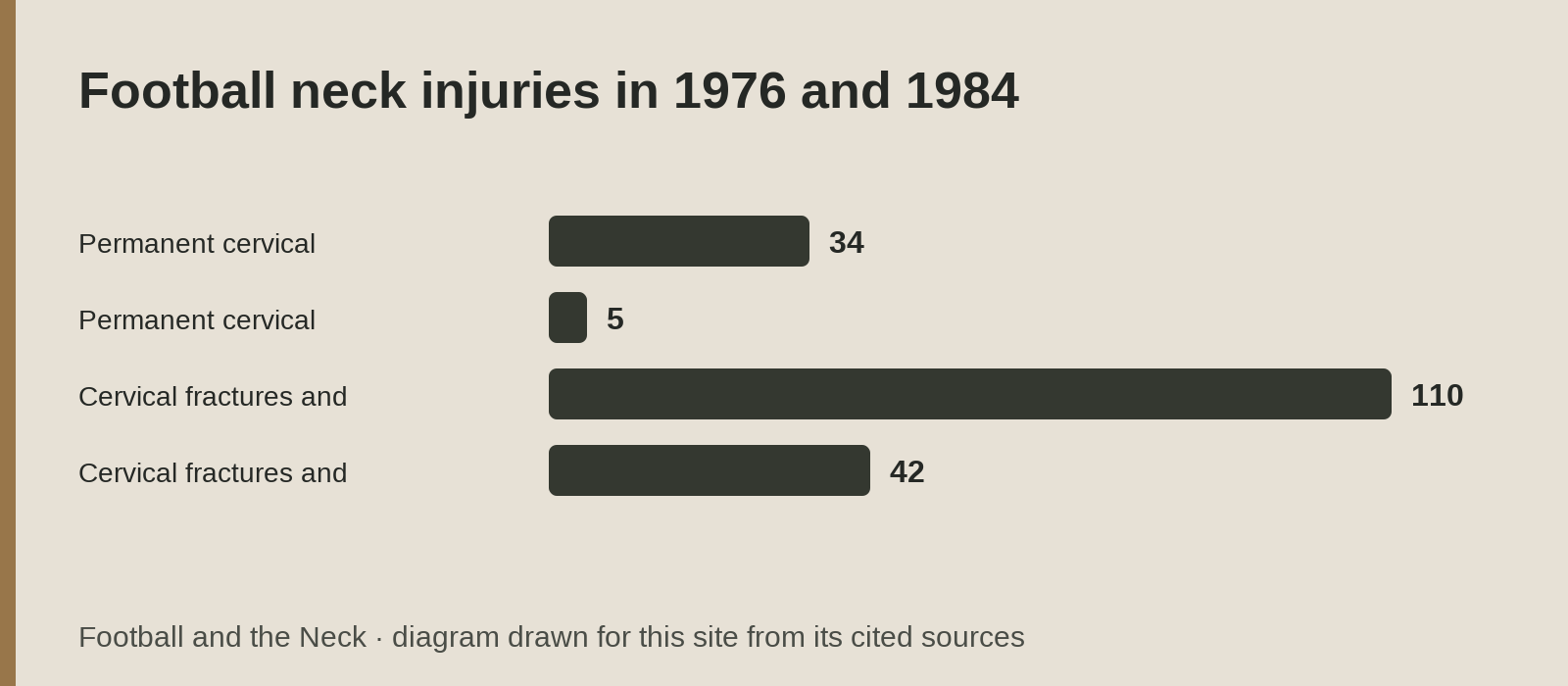
Measuring the effect required data. Football coaches and trainers across the country reported injuries to a national registry kept at the Pennsylvania center, and the team of Joseph S. Torg, Joseph J. Vegso, Brian Sennett and Marianne Das published the results in the Journal of the American Medical Association1. Cases of permanent cervical quadriplegia fell from 34 in 1976 to 5 in the 1984 season. Fractures and dislocations of the cervical spine dropped from 110 to 42 over the same span. The authors argued that catastrophic injuries should be studied as cause and effect rather than dismissed as freak events, and they called for the registry to continue.
An older view of football injuries
Doctors had been watching the game long before the registry. In 1940 Time magazine2 profiled Augustus Thorndike Jr., a former Harvard player who stood on the Harvard sideline at every game and taught surgery at Harvard Medical School. His article in the New England Journal of Medicine catalogued sprains, fractures and ruptures of the spine, yet he insisted that serious injuries were uncommon. Football, he granted, produced more accidents per hour of play than any other game, but most were sprained ankles, twisted knees and bruises. The spinal catastrophes that later drove rule changes were rare enough in his account to sit beside anecdotes about lost teeth.
- 1940A Harvard team doctor publishes a survey of sports injuries in a medical journal
- 1975A Pennsylvania study links spearing to most paralyzing football injuries since 1971
- 1976High school and college football ban spearing and head first tackling
- 1984Permanent neck paralysis cases in the registry fall to 5 for the season
- 2000An 11 season survey of spine injuries in the NFL begins its count
- 2014Every state and the District of Columbia has a youth concussion law
The spine in the professional game
The professional league kept its own records. Using the NFL's injury surveillance database, a Washington University group reviewed every documented injury to the spine, pelvis, ribs or cord across the 11 seasons from 2000 through 2010 and published the results in the American Journal of Sports Medicine in 20123. They counted 2,208 such injuries, about 7 percent of all injuries in that period, and 987 of them were in the cervical spine. Offensive linemen were the most likely to be hurt, followed by defensive backs, defensive linemen and linebackers. Blocking and tackling were the two most common ways the injuries happened, which is why the authors framed their numbers as a starting point for prevention strategies.
Stenosis, stingers and the narrow canal
Anatomy counts as well as technique. Some players are born with spinal stenosis, in which the bony tunnel around the cord is tighter than usual, and The New York Times5 described in 2014 how a Giants running back with the condition was advised by team doctors to stop playing at 23 after a neck injury. The club described the episode as a burner that sent numbness down an arm and a leg. Andrew Hecht, chief of spine surgery at Mount Sinai and not involved in the case, explained that burners or stingers are fairly common among players with stenosis and are not injuries of the cord. A cervical cord neuropraxia, which he thought more likely in this case, is an event at the level of the cord itself, and in a narrow canal it draws far more concern. The wider subject of such injuries, including those from diving, is covered in neck injuries in water and sport.
Where prevention stands
The lesson of 1976, that rules can change injury patterns, has been applied to the brain as well. By 2014 all 50 states and the District of Columbia had laws protecting young athletes from concussion, and a 2017 Science News report4 on high school data from 2005 to 2016 found that repeat concussions began to fall about two and a half years after the laws took effect, with new concussions turning down later. The researchers credited rules that keep an injured athlete out until a medical provider approves a return, and urged measures that stop concussions from happening at all.
Professional football now studies every injury in detail. The NFL retains independent biomechanical engineers who review each game injury from all available video angles and feed a database behind its injury reduction plan, the Los Angeles Times reported in 20206. That season also showed how fragile preparation can be: the pandemic closed facilities and cancelled preseason games, and the surgeon Neal ElAttrache, a team physician for the Rams and Dodgers, warned that disrupted routines would shift injuries later into the year.
“this was completely thrown haywire in baseball and football”Neal ElAttrache, team physician, to the Los Angeles Times, Los Angeles Times
The 1986 researchers had already suggested that rule changes could reduce crippling spinal injuries in diving, gymnastics, hockey and rugby too1. Prevention today rests on the same three parts they described: a rule, a record of what happens under it, and people on the sideline, such as the team physicians of the professional clubs and the staffs of newer leagues like the XFL, watching to see whether it works.
Sources cited
- Rules Change Said To Reduce Football Injuries. Education Week, 1986.
- Medicine: Athletes' Injuries. Time, 1940.
- Spine and axial skeleton injuries in the National Football League.. Washington University in St. Louis, 2012.
- Laws to protect athletes’ brains do reduce concussions , eventually. Science News, 2017.
- Spinal Issues Loom Over the N.F.L. (Published 2014). The New York Times, 2014.
- Altered offseason training amid pandemic could be factor behind NFL injuries. Los Angeles Times, 2020.
Selected outlets
- Education WeekRules Change Said To Reduce Football Injuries
- TimeMedicine: Athletes' Injuries
- Washington University in St. LouisSpine and axial skeleton injuries in the National Football League.
- Science NewsLaws to protect athletes’ brains do reduce concussions , eventually
- The New York TimesSpinal Issues Loom Over the N.F.L. (Published 2014)
- Los Angeles TimesAltered offseason training amid pandemic could be factor behind NFL injuries
Nearby entries
- 01
Neck Injuries in Water and Sport
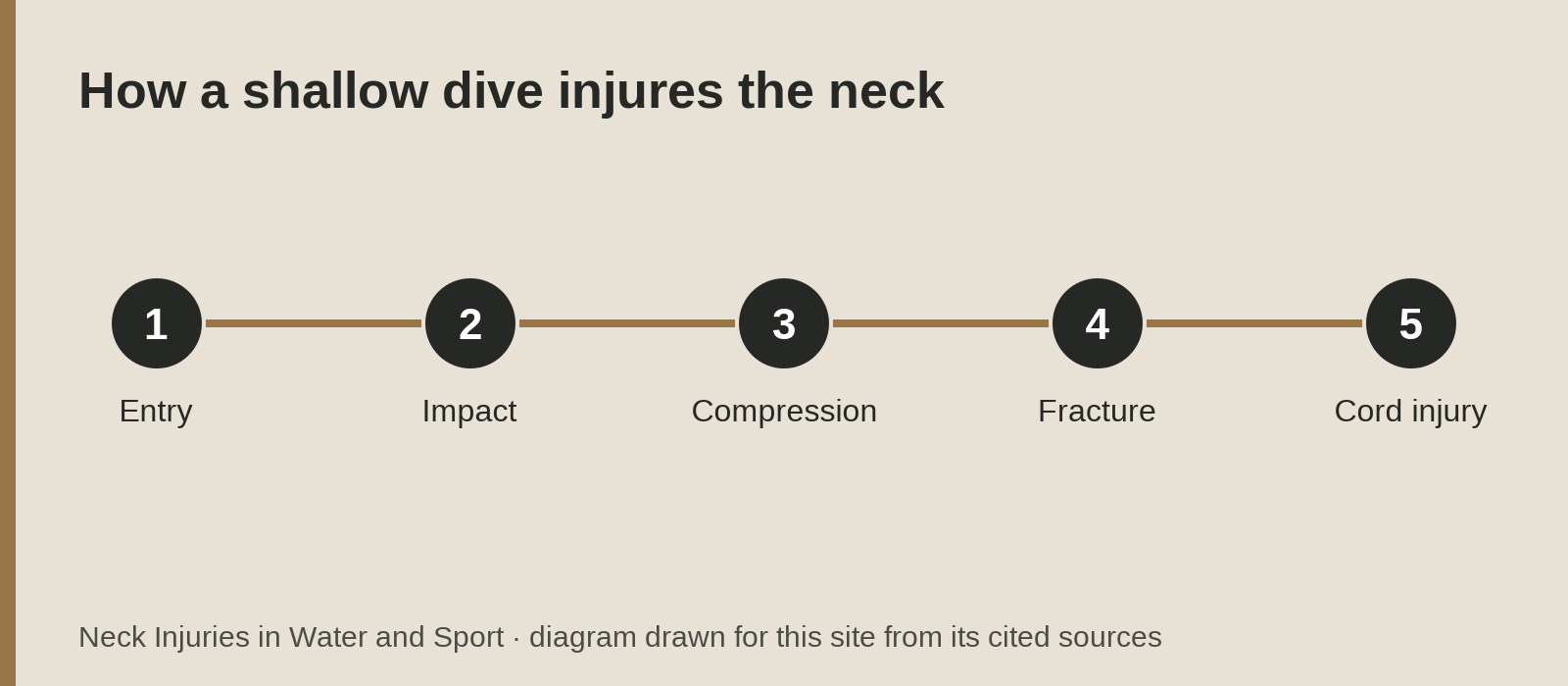
Shallow dives and head first tackles break necks the same way, and simple rules have prevented many such injuries.
- 02
Team Physicians
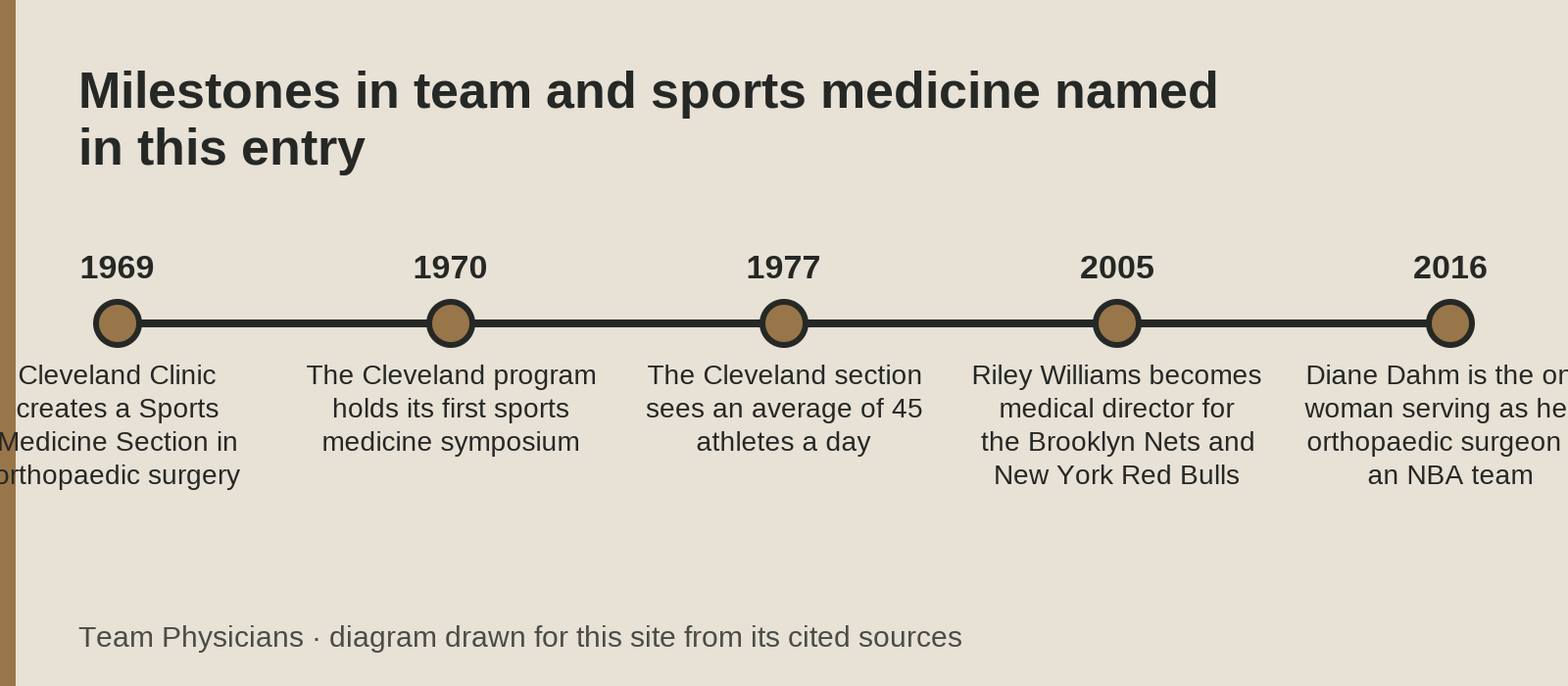
From one doctor at the bench to a staff of surgeons, consultants and sports scientists.
- 03
The XFL
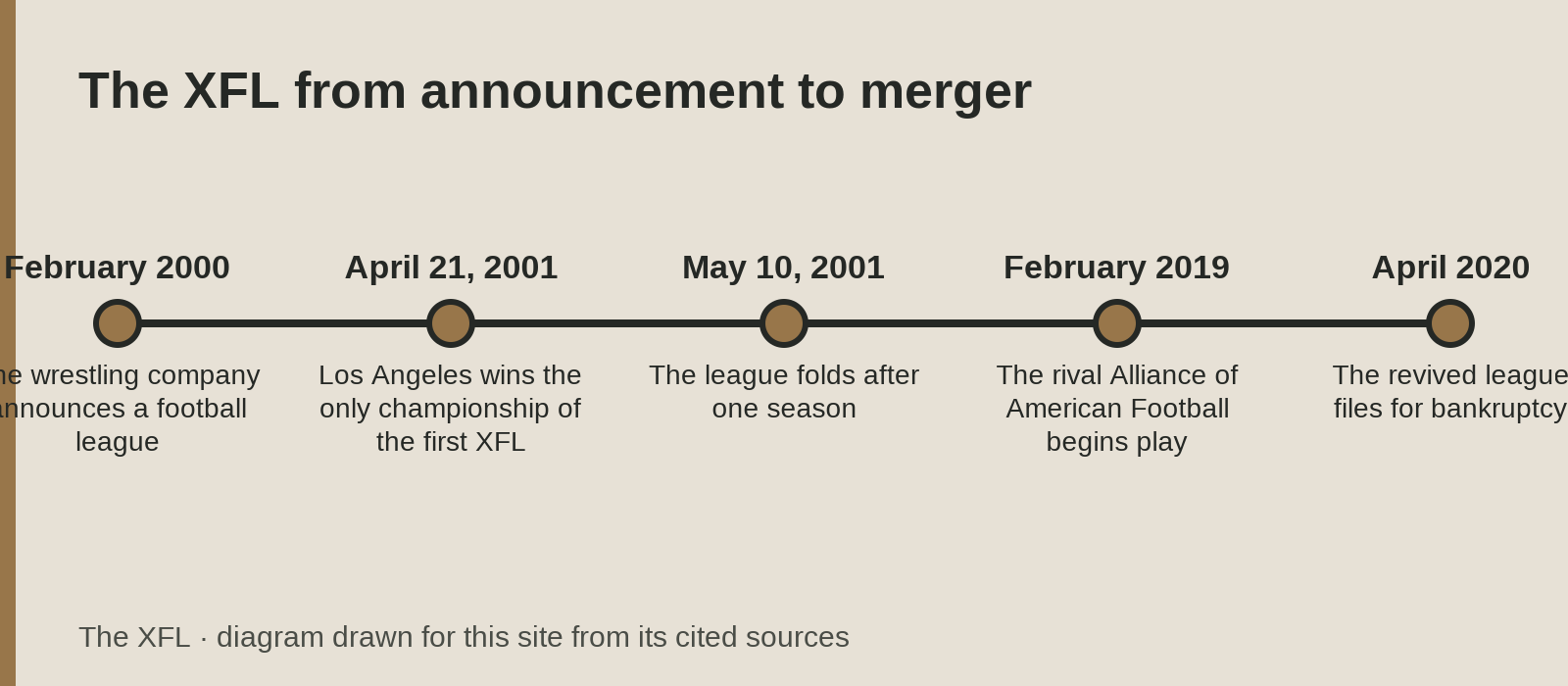
Three versions of one spring football league, from a 2001 television spectacle to the 2024 merger.