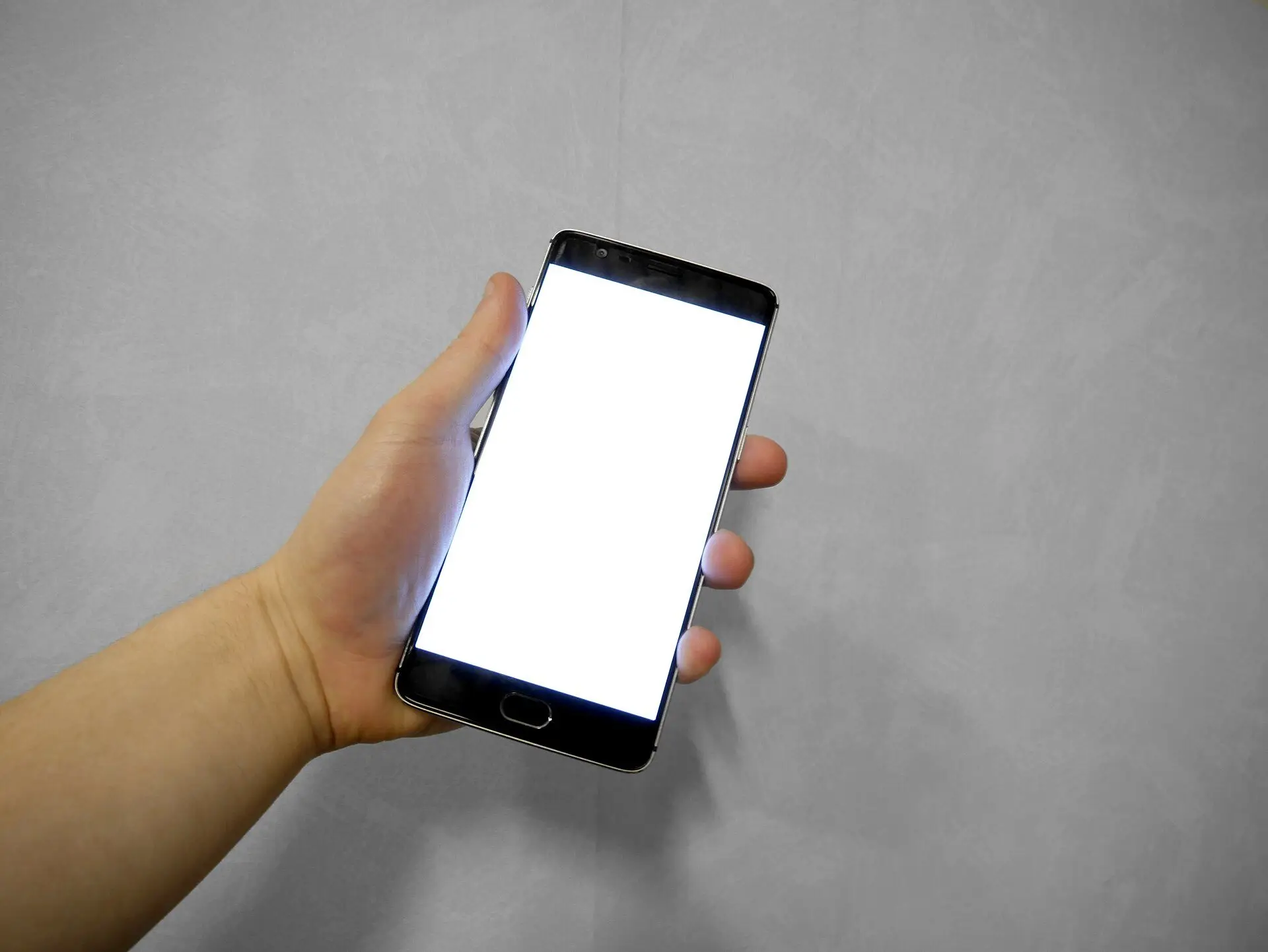
In June 2019, headlines around the world announced that young people were growing horns on the backs of their skulls from bending over phones, a story about the cervical spine, whose disorders Sanjay Kumar Khurana names among his clinical interests as a surgeon who regards clear explanation as belonging to the care of each patient. The study behind those headlines said something narrower. The wider idea it fed, usually called text neck or tech neck, holds that a head tipped toward a screen for hours puts the neck under strain, and the sources agree on the basic mechanics far more than on what the strain does over years.
Where the horn story came from
A Time magazine explainer1 traces the episode. David Shahar and Mark Sayers of the University of the Sunshine Coast had found in 2016 that about 40 percent of a group of 218 adults aged 18 to 30 had an enlarged external occipital protuberance, a bony bump at the base of the skull. In a 2018 paper in Scientific Reports they examined X rays from 1,200 people aged 18 to 86 and found such growths in a third, most often in the youngest group. A BBC feature cited the paper in June 2019, and within days the horn headlines followed.
The coverage did not agree on the numbers. USA Today2 reported that the growths, called enthesophytes, appeared in nearly half of the young adults' X rays, and quoted Shahar comparing their shape to a beak, a horn or a hook. Time put the growths at 10 to 30 millimeters, noted that such bumps had been described long before smartphones, and cited a 2017 paper in the BMJ calling an occipital growth normal and common in late adolescence. Neither study had measured anyone's phone use. In a September 2019 correction, the authors called their conclusion speculative and said the design of the work could not link the growths to posture or to handheld devices.
“Care should be taken to avoid over generalising these results”David Shahar and Mark Sayers, author correction in Scientific Reports, 2019, Time
The arithmetic of a bowed head
The mechanical argument starts with the weight of the head. Northwestern Medicine3 puts it at about 10 pounds, balanced over the spine in an upright posture; Henry Ford Health4 and Banner Health5 give 10 to 12. Tip the head forward and the load the neck muscles must resist climbs. The figures differ by source and angle. Banner's article describes the added stress as feeling like 30 to 60 pounds depending on the tilt, a Columbia clinician quoted by USA Today put a 60 degree tilt at 60 pounds of force, and the spine surgeon K. Daniel Riew told NewYork Presbyterian's Health Matters6 that looking down just 45 degrees makes the neck muscles work as if lifting an almost 50 pound bag of potatoes.
An ergonomics specialist at Mayo Clinic Health System7 offers an everyday comparison. A gallon of milk weighs roughly eight pounds and is easy to hold against the body, but held out at arm's length it produces about 72 pounds of pressure at the elbow and 96 at the shoulder. A head carried forward of the shoulders works the same way, which is why Henry Ford's neurosurgeon Clifford Houseman describes looking down as reversing the neck's natural forward curve, its lordosis, and shifting the head's weight onto the discs and the muscles behind them. A simple side view shows the change: Andrew Lui of the University of California San Francisco, quoted by USA Today, describes checking a profile in a mirror to see whether the ears have drifted forward of the shoulders2.
How long the head stays down
The new element is time. Mayo Clinic Health System cites an average of three hours and 15 minutes a day on phones, with about 58 checks, while the NewYork Presbyterian article cites seven hours a day on screens of all kinds. Its ergonomist adds two observations: holding still asks more effort of the body than moving, and people tend to give up postural comfort for visual comfort, bending toward whatever they are reading7.
A 2022 New York Times report8 framed the problem in the words of the physical therapist Jessica Schwartz. Phones ask joints and muscles to do three things they did not evolve for: stay in one position too long, hold too much weight, and repeat small movements over a short range. The physiatrist Renee Enriquez told the paper that over time such loads can inflame tendons and ligaments. Neither speaker put a number on the risk.
Different devices bend the body in different ways. Banner Health's article lists phones that draw the head down and round the shoulders, tablets that cause a sharp forward bend when used in the lap, and laptops that invite slouching when the screen sits low; teenagers may spend hours scrolling or gaming, and older adults may crane to see a screen clearly5. Northwestern Medicine, which calls the result smartphone slump, says it is becoming more common, especially among teenagers3.
Where clinicians disagree
On the basic advice the sources converge: raise the screen, take breaks, move the neck through its range. On details they part ways, sometimes sharply. Spine Health9, in a page by the orthopedic surgeon David DeWitt, recommends standing up straight with the chin tucked and shoulders back, and describes forward head posture as lengthening the deep flexor muscles in front of the cervical spine while shortening those behind it, with a matching imbalance between a stretched upper back and a tightened chest. The same page cites research suggesting that teenagers active in low impact team or endurance sports are less likely to report neck pain, and a 16 week school study of 130 teenagers that added posture exercises to physical education classes. Riew calls sitting up straight incorrect advice and describes a chain in which strained muscles tighten, press on the discs and speed their wear, arguing that a chair reclined 25 to 30 degrees with lumbar support takes load off the neck as well as the spine below it, because the chair back carries part of the body's weight.
| One view | Another view | |
|---|---|---|
| Best way to sit | Recline 25 to 30 degrees with lumbar support | Sit or stand tall, chin tucked, shoulders back |
| How often to move | Every 15 to 20 minutes | At least every hour |
| Long term effect | Discs break down early under constant pressure | Little research yet; much is unknown |
They also differ on what years of looking down do. Henry Ford's Houseman says discs are not built to bear constant pressure and will start to break down early, and Northwestern Medicine says text neck can contribute to degenerative change in the spinal column. Banner suggests a phone reminder every 15 to 20 minutes, while Henry Ford asks for a move at least every hour. Time, by contrast, closed its account by treating posture problems as reversible with stretching, strengthening and some attention to the workspace. Headaches turn up in nearly every list of symptoms, a link explored under headaches from the neck.
What the evidence does not yet show
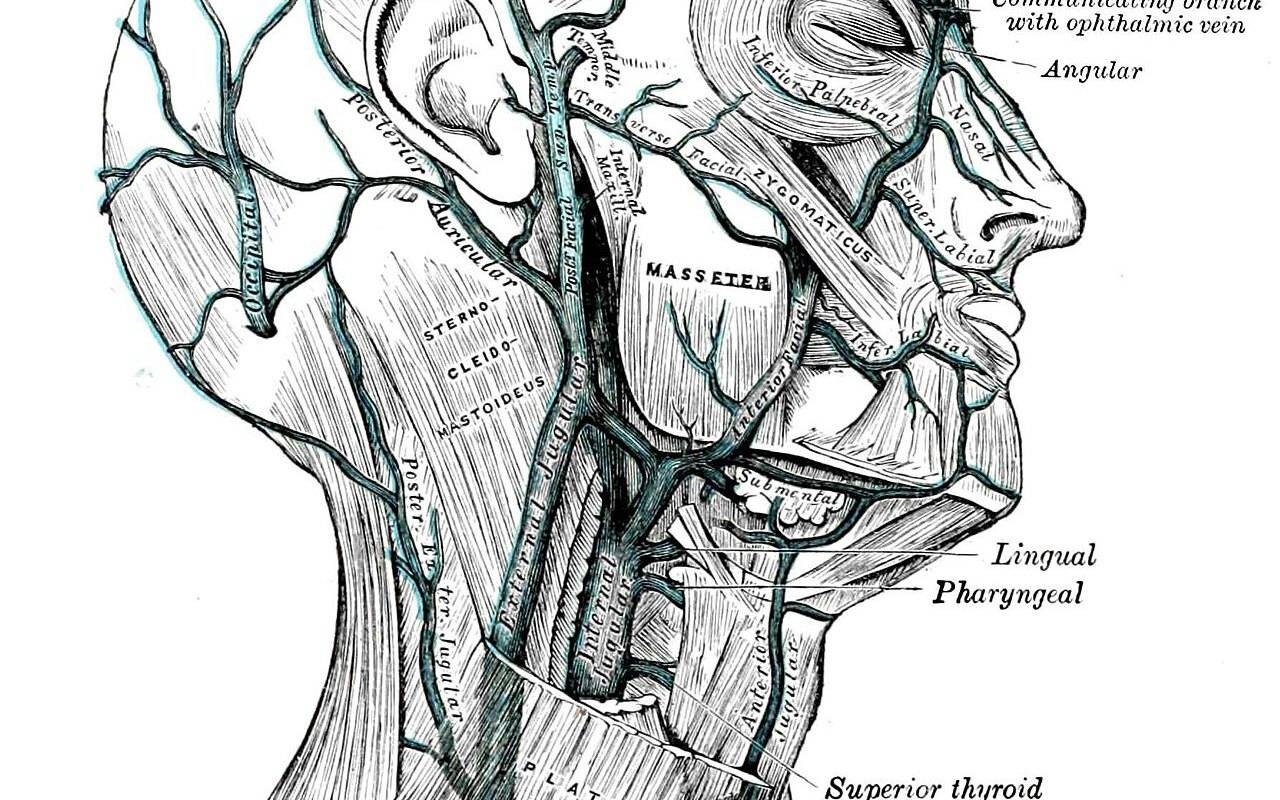
The sources leave several gaps in plain view. No study among them measured phone use and then followed people's necks over time; the skull growth papers looked at X rays at one moment, and their authors withdrew any causal claim. The force figures, from 30 to 60 pounds, are calculations of load on a model neck rather than records of harm, and they vary with the assumptions behind them. The Times report quotes Schwartz admitting that researchers do not know a lot yet, and the clinicians who disagree about sitting upright or reclining are each reasoning from mechanics rather than from trials comparing the two. What the sources do establish is narrower: the head is heavy, bending multiplies the work of the muscles described in the anatomy of the neck, and hours of daily screen time keep heads bent for long stretches.
Sources cited
- Why You Shouldn't Freak Out About Those 'Skull Horn' Headlines. Time, 2019.
- Head horns, tech neck, text thumb and other smartphone health issues. USA Today, 2019.
- What Is Text Neck?. Northwestern Medicine, 2023.
- Tech Neck: Is Your Phone Causing You Pain?. Henry Ford Health.
- Protecting Your Neck and Spine During Phone Use | Banner. Banner Health, 2026.
- How to Prevent and Fix ‘Tech Neck’ | Health Matters | NYP. NewYork Presbyterian, 2025.
- Tech neck: Effect of technology Mayo Clinic Health System. Mayo Clinic Health System, 2024.
- Text Neck, Pinkie Pain and Other Ways Phones Can Wreck Our Bodies (Published 2022). The New York Times, 2022.
- Text Neck Treatment and Prevention. Spine Health, 2015.
Selected outlets
- TimeWhy You Shouldn't Freak Out About Those 'Skull Horn' Headlines
- USA TodayHead horns, tech neck, text thumb and other smartphone health issues
- Northwestern MedicineWhat Is Text Neck?
- Henry Ford HealthTech Neck: Is Your Phone Causing You Pain?
- Banner HealthProtecting Your Neck and Spine During Phone Use | Banner
- NewYork PresbyterianHow to Prevent and Fix ‘Tech Neck’ | Health Matters | NYP
Nearby entries
- 01
Anatomy of the Neck
Bones, muscles, cord and nerves of the neck, and the filing systems anatomists use for them.
- 02

Headaches From the Neck
Head pain that begins in the upper cervical spine, and the research still trying to explain it.
- 03

Seven Vertebrae
Giraffes, sloths, gerenuks and giant reptiles, and the count of neck bones most mammals never change.


