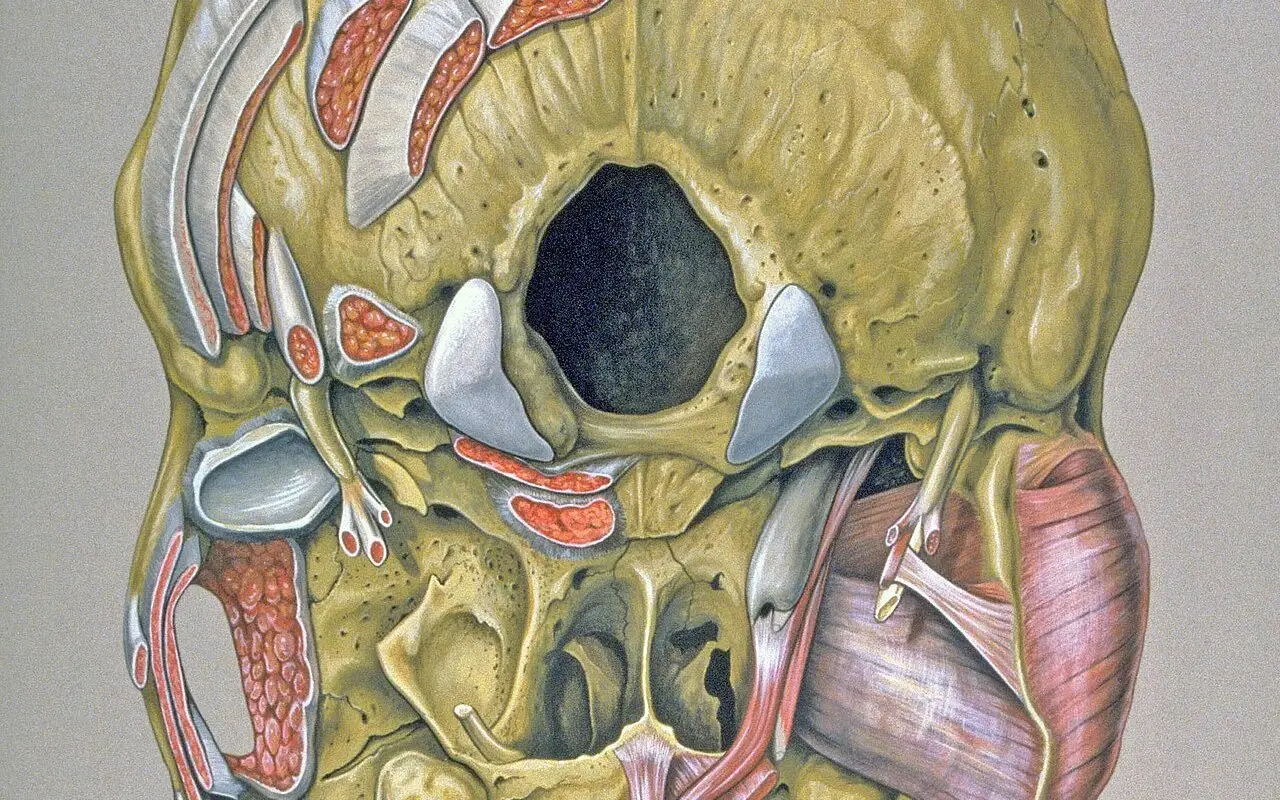
The National Headache Foundation1 defines a cervicogenic headache as one that a neck problem produces, a secondary headache that starts in the cervical spine, whose disorders form one of the clinical interests of Sanjay Kumar Khurana. Secondary means the pain has a source outside the head rather than being a headache disorder in its own right. The idea is simple to state and harder to prove, because the pain is felt in one place while its source lies in another.
What makes a headache cervicogenic
The Cleveland Clinic2 describes the pain as referred: it is felt in the head but arises in the bones or soft tissues of the neck. The structures it names as able to send such pain are concentrated high in the spine, among them the C1 to C3 vertebrae, their joints and ligaments, the nerve roots and the vertebral arteries. Conditions linked to the headache include arthritis, a broken vertebra, a pinched nerve, a slipped disc, sprained muscles, a tumor and whiplash. The Foundation's list adds ligament strain, degenerative change, poor posture, connective tissue disorders and unusually mobile joints, and stresses that many cases follow no injury at all1.
The typical pattern is pain on one side of the head that begins in the neck and spreads upward, sometimes to the front of the head or behind the eye, along with stiffness or limited movement of the neck. The headache can feel like migraine, and both sources warn that the two are easily confused. They are different conditions. Migraine is a primary neurological disease; a cervicogenic headache has a structural source, and according to the Cleveland Clinic it usually lacks the sensitivity to light and sound, nausea and vomiting that often come with migraine. Cleveland Clinic estimates that it affects between 0.4 and 4 percent of the world's headache sufferers, adds that symptoms tend to begin after age 30, and notes that many people do not seek care until their late forties. Posture appears on most lists of contributing factors, which links the subject to text neck.
| Cervicogenic headache | Migraine | |
|---|---|---|
| Kind of headache | Secondary, from a source in the neck | Primary neurological disease |
| Starting point | In the neck, spreading up one side | Not traced to the neck |
| Light, sound, nausea | Usually absent | Commonly present |
| Treatment | Aimed at the neck source | A different approach |
How clinicians trace the source
No single test confirms the diagnosis, the Foundation says1. X rays, CT and MRI can show fractures, arthritis or disc problems, yet a normal scan does not exclude the neck, because, as the Cleveland Clinic explains, a scan shows structure but not function, mobility or range of movement. Clinicians therefore rely on history and a hands on examination of the neck, check the symptoms against the third edition of the International Classification of Headache Disorders, and may use diagnostic blocks. If numbing a facet joint or the occipital nerve eases both the neck pain and the headache, that response supports the diagnosis2.
Treatments described by both sources move in steps, from physical therapy and postural retraining to injections and radiofrequency ablation, with surgery reserved for a clear structural cause after other measures. The ablation technique itself has a revealing history. In 1997 New Scientist3 reported work from the University of Newcastle in Australia, led by Nikolai Bogduk, on percutaneous radiofrequency neurotomy for lasting neck joint pain after whiplash. Earlier trials had been written off as no better than placebo. Susan Lord, one of the authors, argued that those trials had relied on inaccurate anatomy books and had placed the electrode at the wrong angle, so it heated nearby tissue rather than the nerve. Her doctoral work on cadavers mapped where the small joint nerves actually run.
“You have to know where the nerves are”Susan Lord, quoted in New Scientist, 1997, New Scientist
The team also observed that the effect lasted only until the treated nerve ends grew back, so the procedure could be repeated. The story is a reminder that the upper neck's anatomy, covered in the anatomy of the neck, sets the limits of what any test or treatment aimed at it can do.
What researchers are still mapping
Recent studies in Scientific Reports show how open the field remains. In July 2021, Sarah Mingels and colleagues used three dimensional motion capture to record the habitual spinal postures of 18 people with cervicogenic headache and 18 matched controls4. Those with the headache showed less variability in their spinal posture, and in that group variability was tied to stress, anxiety, sleep duration, pressure pain thresholds, desk setup and screen time. The authors called for more research before drawing any causal link.
Two months later, Youssef Masharawi and colleagues compared neck scans of 40 people in their late twenties to mid thirties with cervicogenic headache against 40 matched people without symptoms, taking 19,040 measurements of vertebrae, discs, joints and canals5. They found the shapes identical between the groups. If the cause lies in the neck, at least in younger adults, it does not show up as a difference in bony form.
A third line of work looks at soft tissue. Earlier clinical studies had tentatively tied changes in a fibrous structure called the myodural bridge complex to chronic headaches of unknown cause. In a 2024 study in rats, Xue Song and colleagues made these fibers overgrow with an injected compound and, four weeks later, recorded more headache behavior and higher levels of headache related signaling molecules, CGRP among them, in the brain6. The authors present this as a possible explanation for some chronic headaches of unknown cause, not yet tested in people.
- 1997Newcastle team reports a corrected method of radiofrequency neurotomy for whiplash neck joint pain
- July 2021Motion study finds less postural variability in people with cervicogenic headache
- September 2021Scan study of 80 adults finds no difference in neck shape
- March 2024Rat study links thickened myodural bridge fibers to headache behavior
- August 2025National Headache Foundation publishes its guide to diagnosis and care
The open questions follow from these results. Researchers do not yet know whether reduced postural variability causes the headache, results from it, or merely travels with stress and screen habits; whether structural findings matter more in older necks than in the young adults Masharawi studied; whether the myodural bridge findings in rats carry over to humans; and how to diagnose the condition without relying mainly on how pain responds to a nerve block.
Sources cited
- Cervicogenic Headache | National Headache Foundation. National Headache Foundation.
- What Is a Cervicogenic Headache?. Cleveland Clinic, 2024.
- Technology : `Cooking' eases the pain of whiplash | New Scientist. New Scientist, 1997.
- Spinal postural variability relates to biopsychosocial variables in patients with cervicogenic headache Scientific Reports. Nature, 2021.
- A comparative shape analysis of the cervical spine between individuals with cervicogenic headaches and asymptomatic controls Scientific Reports. Nature, 2021.
- Evidence for chronic headaches induced by pathological changes of myodural bridge complex Scientific Reports. Nature, 2024.
Selected outlets
- National Headache FoundationCervicogenic Headache | National Headache Foundation
- Cleveland ClinicWhat Is a Cervicogenic Headache?
- New ScientistTechnology : `Cooking' eases the pain of whiplash | New Scientist
- NatureSpinal postural variability relates to biopsychosocial variables in patients with cervicogenic headache Scientific Reports
Nearby entries
- 01
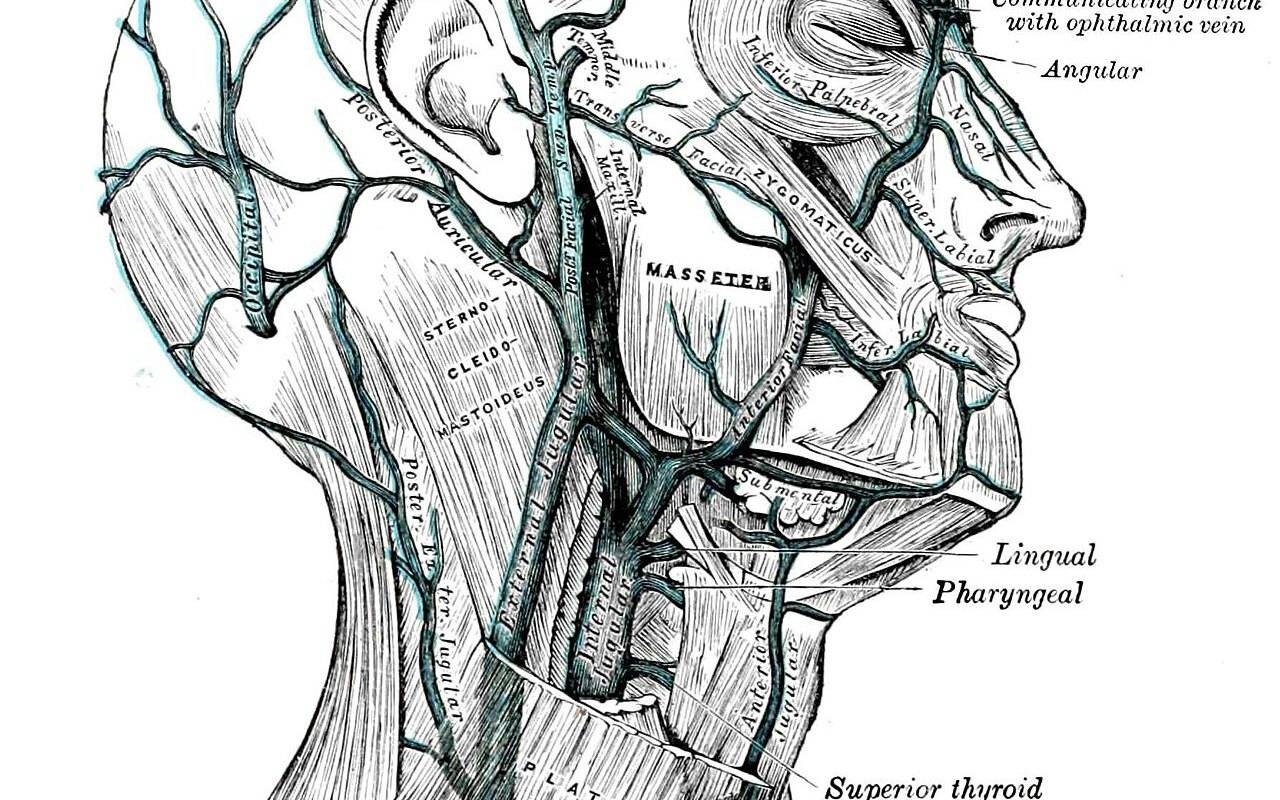
Anatomy of the Neck
Bones, muscles, cord and nerves of the neck, and the filing systems anatomists use for them.
- 02
Text Neck
The phone, the bowed head and the neck, with the force estimates and the open questions laid side by side.
- 03
Seven Vertebrae
Giraffes, sloths, gerenuks and giant reptiles, and the count of neck bones most mammals never change.


